How to Back Up and Organise Your Digital Diary: A Checklist for Peace of Mind
October 06, 2026 - Digital Diaries


September 30, 2026 - Digital Diaries

September 25, 2026 - Memory Keeping
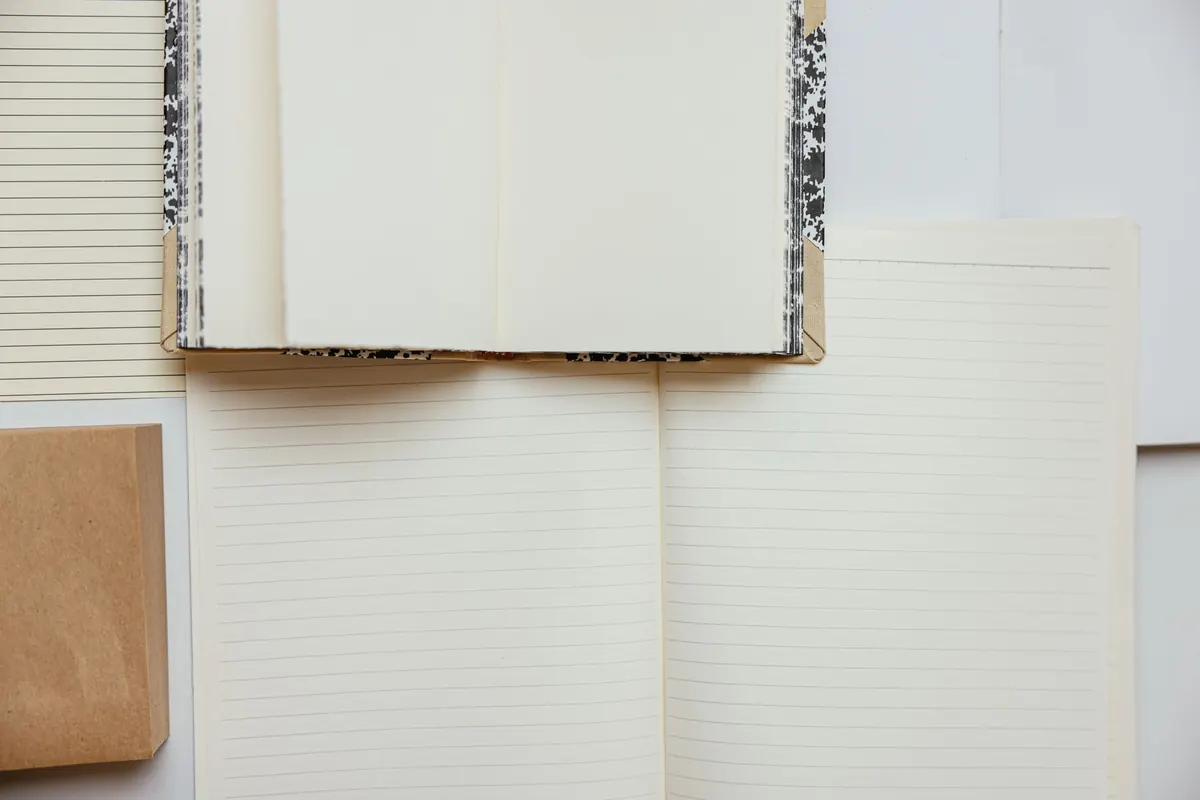
The first page is the hardest. You have a new notebook, a pen that works, and a quiet sense that you should be doing this properly. Then you open it, see all that clean paper, and freeze. Nothing you could write seems good enough for page one.
Here is the useful truth: a journal is not a performance. Its first page does not need to be profound, well organised or even interesting. It needs to exist. If you can put a date and one honest sentence on the page, you have done the work. Everything else is a bonus.
Most writing we do has an audience. An email is for a colleague. A message is for a friend. A shopping list is for future you at the supermarket. A journal has no reader, which sounds freeing but can feel strange. With no one to please, there are also no clues about what to say.
Add the pressure of beginnings. We treat first pages as declarations. This notebook will be where I become organised, calm and reflective. That is a lot to ask of a Tuesday evening and a biro.
Try lowering the stakes on purpose. Your first page is not a contract. It is a doorway. You only need to step through it.
This is the simplest reliable method. Write the date at the top. Then write one honest sentence that is true. It can be dull:
Tuesday 14 May. I do not know what to write, so I am writing that.
That counts. If you want to keep going, add a second sentence about what is actually on your mind: a conversation you keep replaying, the state of the kitchen, a decision you are avoiding. Add a third about what you can hear or see. Rain on the window. A dog barking. The fridge humming.
You now have a first entry. It will not win prizes. It will also be more useful than a blank page, because it proves the notebook is yours to use badly.
If "write anything" is too wide open, borrow a question. Choose one and give it five minutes. Keep your pen moving and do not stop to correct spelling or find better words.
If a prompt feels too big, shrink it. "What is taking up my attention?" can become "What is the first thing I thought about when I woke up?" Small questions are easier to answer honestly.
Some people freeze because a blank page offers no structure. A simple frame can help without turning your journal into a form to fill in.
One line for the date. One line for a fact. One line for a feeling. For example: 14 May. Rained all afternoon. Restless, but glad I stayed in. That is a complete entry. If you have more to say, keep going.
Draw a line down the middle. On the left, write what happened. On the right, write what you made of it. This works well when your day has been busy and your thoughts are tangled. Facts on one side, reactions on the other.
Choose one word for the day — Tired, Hopeful, Thursday, Enough — and write it at the top. Then free-write underneath for five minutes. The word gives you a starting point without dictating where you go.
Here is what a realistic first page might look like:
14 May. I do not know how to start. So: the kitchen is quiet, the radio is off, and I am tired in a way that is not only about sleep. Tomorrow I will write one more line.
Freezing is normal. So is wanting to cross everything out. Try one of these:
Do not force yourself to be positive. A journal is not a gratitude machine unless you want it to be. It can hold frustration, boredom and ordinary complaints. The aim is honesty, not a polished mood.
A journal only works if you feel free to be unguarded. Decide where it lives. A bedside drawer, a shelf above the wardrobe, a bag you take everywhere. If you write digitally, use a password and check who else has access to the device.
If you share a home, it is fair to say plainly that you would like the notebook left alone. You do not need to explain why. If you are writing about something sensitive, consider keeping those pages separate or writing on loose sheets you can store or shred.
Writing can help you untangle feelings, but it is not a substitute for proper advice. For health, money or legal concerns, speak to a qualified professional.
Finish today by leaving the journal somewhere visible, with the pen beside it. Before you close it, write one line that tomorrow you can answer. What am I avoiding? What went well today? What do I need to say? That line becomes your starting point next time, so you never have to face a completely blank page again.
Keep the ritual small. Two minutes after your morning coffee, or five minutes before lights out. Three times a week is better than an ambitious daily plan you abandon by Friday. Consistency matters more than length.
Open the notebook. Write the date. Write one true sentence. If you manage a second, good. If you stop there, that is still a first page, and first pages are for starting, not for proving anything.
Tomorrow, read back what you wrote. You may find it dull. You may find one line that surprises you. Either way, you will have a record of a day that would otherwise have disappeared. That is the whole point. Pen down, page done.
Photo: Cup of Couple / Pexels

A practical checklist for naming, backing up, encrypting and future-proofing a digital diary, so years of private...
Paper and digital diaries each have real strengths. A practical look at searchability, privacy, backups and the...
September 30, 2026 - Digital Diaries
Copyright © 2026 Diary Stack. All Right Reserved.